
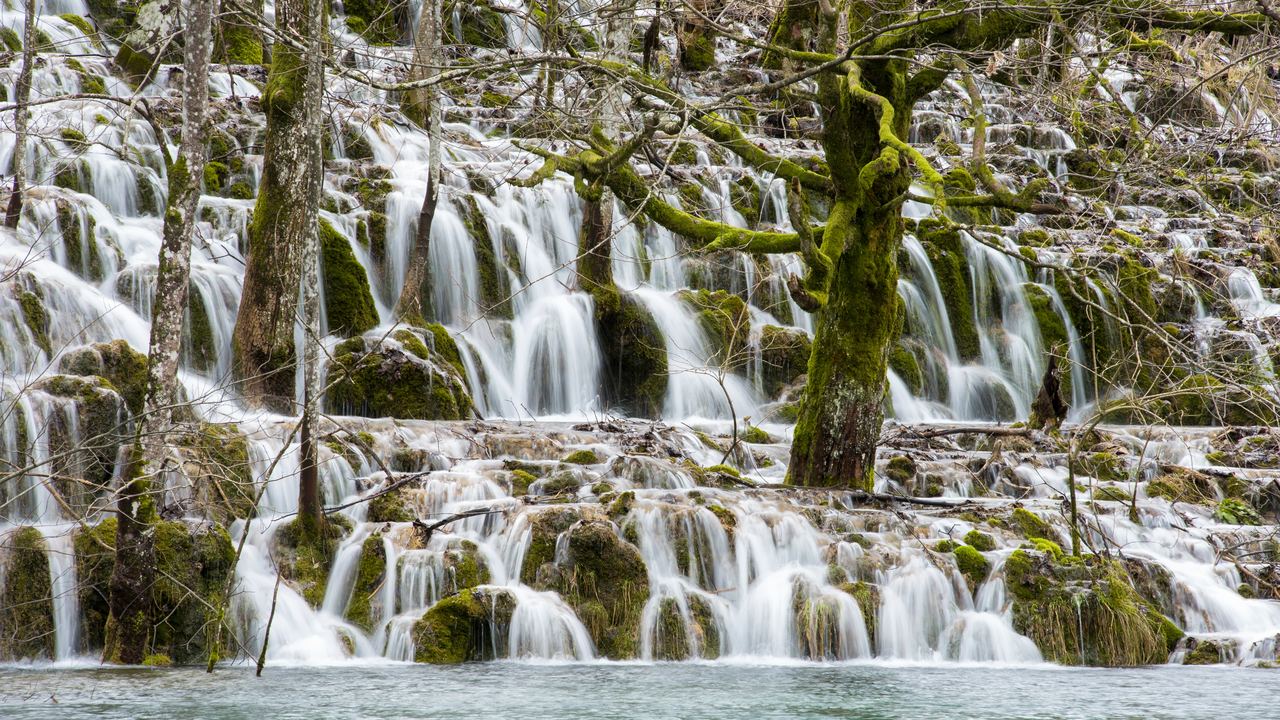
It depends on the site, and the site writes the answer down more often than visitors expect. At Plitvice Lakes the park prohibits swimming. At Krka a visitor may swim in three marked places for four months of the year. In New South Wales the parks service says how to enter a pool, not whether to. This page sets out six rules we read on 2026-10-27 and what each one does and does not tell you.
This page gives general information from the sources named on it, as we read them on the dates shown. It is not medical, legal or safety advice. Rules and conditions at a waterfall can change within hours: follow the signs, the park and your guide, and see a doctor or your public health authority for health questions.
What do the sites we read say about swimming?
Six sources, five shapes of rule. None repeats another. Plitvice bans swimming, Krka limits it to named places and dates, New South Wales and Yosemite give rules for how to behave in the water, Hawaii's health department speaks about disease, and one operator says only that swimming is optional.
| Place or authority | What the page says | Where it is written |
|---|---|---|
| Plitvice Lakes National Park, Croatia | Do not swim in the zone of the National Park; swimming in the lakes is strictly prohibited | Park website: rules of conduct and FAQ |
| Krka National Park, Croatia | Swimming only in designated areas at Roški slap, Stinice and Pisak, from 1 June to 30 September, at your own risk and depending on weather and water level; not outside those areas and dates. Swimming at Skradinski buk is not allowed | Park website: FAQ and Skradinski buk page |
| Dunn's River Falls, Jamaica | Swimming is not required to enjoy the falls or take part in the climb. We found no swimming rule on the page | The operator's own website |
| NSW National Parks, Australia | Do not jump into pools at the base of waterfalls; enter slowly and feet first; never jump into waterfalls from heights; never swim alone | Waterfall safety page |
| Hawaii Department of Health | Do not swim or wade in any freshwater streams or ponds in Hawaii, especially with open cuts or sores | Leptospirosis page of the Disease Outbreak Control Division |
| Yosemite National Park (NPS), California | Swim only in low water, avoid whitewater, and never swim or wade upstream from the brink of a waterfall | Park safety page |
The table shows how little the word swimming covers. At Plitvice it means the lakes, and the park's rules of conduct say it in nine words: don't swim in the zone of the National Park. At Krka the same word is tied to places, dates and conditions. In Australia it is a pool at the foot of a fall, entered slowly and feet first. In Hawaii it is a health question before it is a question of the water itself. Carrying one rule from one site to the next is an easy mistake, because the sentences sound alike and the rules are not.
Why do two parks in the same country disagree?
Both are in Croatia. Their pages read like different documents. Plitvice prohibits, flatly, in the FAQ and on the rules page. Krka makes a conditional offer in its own FAQ: three named places, one season, at your own risk, depending on weather conditions and water levels, and no jumping off the falls or the bridges. Its page for Skradinski buk says in one line that swimming there is not allowed. Neither park's rules page gives a reason, and we will not supply one. Krka's English rules page is looser than its FAQ: it lists not swimming outside clearly marked swimming areas among the things that are not allowed, with no names and no dates, which is why the FAQ is the page to read for the details.
What a visitor can use is the difference in work. Plitvice never asks you to look for a marked area. Krka asks you to check the date, the place and the water level on the park's own pages before you pack a towel. Our guide to choosing between the two parks sets the other differences side by side.
Can you jump into the pool below a waterfall?
The parks service of New South Wales answers with technique. It says not to jump into pools at the base of waterfalls and to enter slowly and feet first, to watch for hidden hazards including submerged rocks, objects, branches and debris, and never to jump into waterfalls from heights. The same page warns that water temperature may drop suddenly and cause cold water shock or hypothermia, and never to swim alone. It adds two conditions: during droughts the flow may be low and dangerous for swimming, and after heavy rain strong currents and hidden undercurrents can develop. Two further lines are easy to skim past. The page says to avoid alcohol near water because it raises the risk of accidents and impairs decision making, and it notes that waterfalls are often remote and the water may not be suitable for drinking.
Krka draws the line differently. Jumping off the falls or off the bridges is prohibited there. Yosemite puts it by geography: never upstream from the brink. The three rules agree. What you cannot see under the surface, you do not jump into.
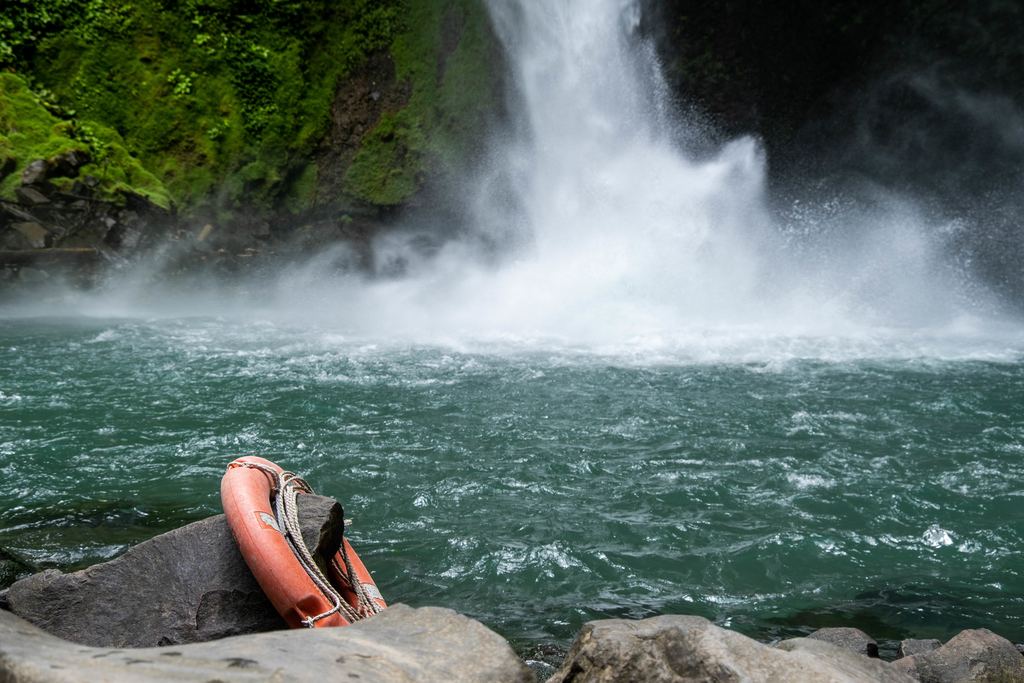
A pool that looks inviting is not a rule. The rule is on the park's page.
What does Hawaii's health department say about streams?
Do not swim or wade in any freshwater streams or ponds in Hawaii, especially when you have open cuts or sores.
Read the scope first. The Hawaii Department of Health writes about freshwater streams and ponds in Hawaii and about a bacterial disease, leptospirosis, which it says is most common in warm climates. The photo captions on the page name Maunawili Falls on Oahu and Hanakāpīʻai Stream on Kauaʻi, but the advice itself does not mention waterfalls. We read it as a statement about the water that feeds them and not as a rule about any one fall, and we do not stretch it beyond Hawaii.
The page adds that swimming with the head underwater raises the risk of infection through the eyes, nose and mouth, and it advises against drinking pond or stream water without boiling or chemical treatment. On timing it gives one figure, and we use only that one: a person can become ill 2 days to 4 weeks after exposure.
Why does rain change the water?
Two of our sources connect the weather to the water. A 2018 fact sheet for clinicians from the Utah Department of Health says outbreaks of leptospirosis tend to occur after heavy rainfall or flooding in areas where the disease is endemic. NSW National Parks asks for extra care after heavy rain because of currents and undercurrents. Weather is the link. Our reading, not theirs: the stream you see the day after a storm is not the stream of the day before, and a rule written for calm weather says nothing about it.
Do you have to swim to see the falls?
At Dunn's River Falls, no. The site's FAQ says swimming is not required to enjoy the falls or to take part in the climb, and it adds that you can have a full experience without swimming at all. It also says the rocks can be slippery and proper footwear is essential, recommends water shoes or grip sandals, and lists flip flops without grip and footwear without traction among the things to avoid. Children, it says, should always be supervised by an adult near the water.
This is an operator describing its own product, not a rule from an authority, and we read it that way. It does answer a question that listings often leave open. A climb, a boat ride or a walk to a viewing point can be the whole visit, and the pool is optional.
Where does this page stop?
Silence is the first limit: for most waterfalls in our catalog we found no swimming rule that we could open and read, and a page without a rule is not a page that allows it, which is why we never read a missing rule as permission. A listing that promises a swim near a waterfall does not change that waterfall's rule: check the rule on the park's page, not in the listing, and when the two disagree, the park's page wins.
The second limit is the date. Several pages above carry no date at all, so the date we give is the day we read them. The third is wording. A swimming area at one park is a marked beach, at another a pool below a fall, and the page does not always say which. We cannot settle that from here.
How do you check a rule before you go?
| Check | What to look for |
|---|---|
| Source | The park or authority itself, not a listing or a blog |
| Season or date | A named period, as Krka gives it |
| Place | A named or marked area, as Krka and Plitvice write it |
| Conditions | A water level or weather condition, as Krka and NSW National Parks give |
| Silence | If the site says nothing, ask the park; no answer is a no |
A swimming rule is one of several things a site can ask of you, and the others are covered elsewhere on this site in guides that each rest on pages we opened. What park services say about edges, rock and high water is a separate guide, and so is which sites ask for a permit or a time slot. The same information, applied to travel with children or limited mobility, is in our guide for families. If a waterfall is closed on the day, this page covers what to do instead. Rules come first. All of them sit in our trip planning section, and the tour checklist comes after the rules, not before.
Quick answers
Can you swim at Plitvice Lakes?
No. The park's FAQ says swimming in the lakes is strictly prohibited, and its rules of conduct say not to swim in the zone of the National Park. Both pages were read on 2026-10-27.
Can you swim at Krka National Park?
Only in designated areas at Roški slap, Stinice and Pisak, from 1 June to 30 September, at your own risk and depending on weather and water level, according to the park's FAQ. Swimming at Skradinski buk is not allowed. Check the park's pages before you go.
Should you jump into the pool at the bottom of a waterfall?
NSW National Parks says not to jump into pools at the base of waterfalls, to enter slowly and feet first, and never to jump into waterfalls from heights.
Is swimming part of the Dunn's River climb?
The site says swimming is not required to enjoy the falls or take part in the climb. We found no swimming rule on the page, and the page can change.
Does Hawaii's health department mention waterfalls?
Its leptospirosis page advises against swimming or wading in any freshwater streams or ponds in Hawaii. Photo captions name two falls, but the advice is about streams and ponds in general.
Data verified on . Each rule was read on 2026-10-27 on the page named in the table. Lines marked as our reading are ours. Rules change: check the official site before you go. Editorial Policy
Check whether a permit or a time slot comes first
Some sites ask for a permit or a time slot that a tour cannot replace. Our guide lists the cases we could document.