
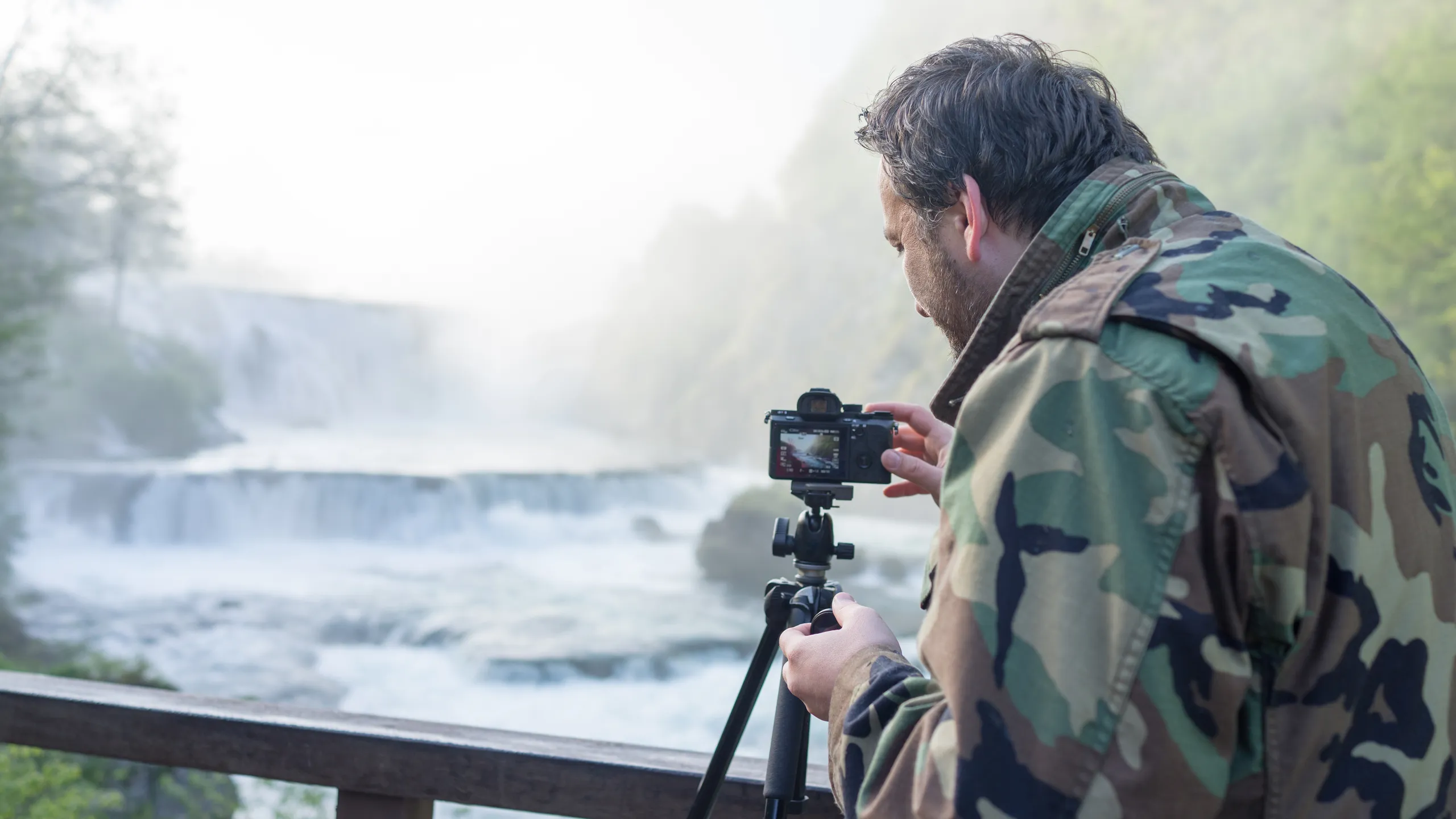
Most of what goes into the bag for a waterfall is ordinary: shoes that grip wet stone, something that keeps a phone dry, a plan for where the rest of your things will sit while you walk. The drone is the exception. Its rules differ at every one of the eight sites we checked, so it gets a section and a table of its own below. For clothes and camera we read what the sites say themselves. Where they say nothing, we say that, and we do not fill the gap with advice from forums.
We earn a commission when you book a tour through the links on this site, at no extra cost to you. It does not change what we write: this page also says when a tour is not worth buying. How we are paid is explained in our Editorial Policy.
Which shoes does a waterfall need?
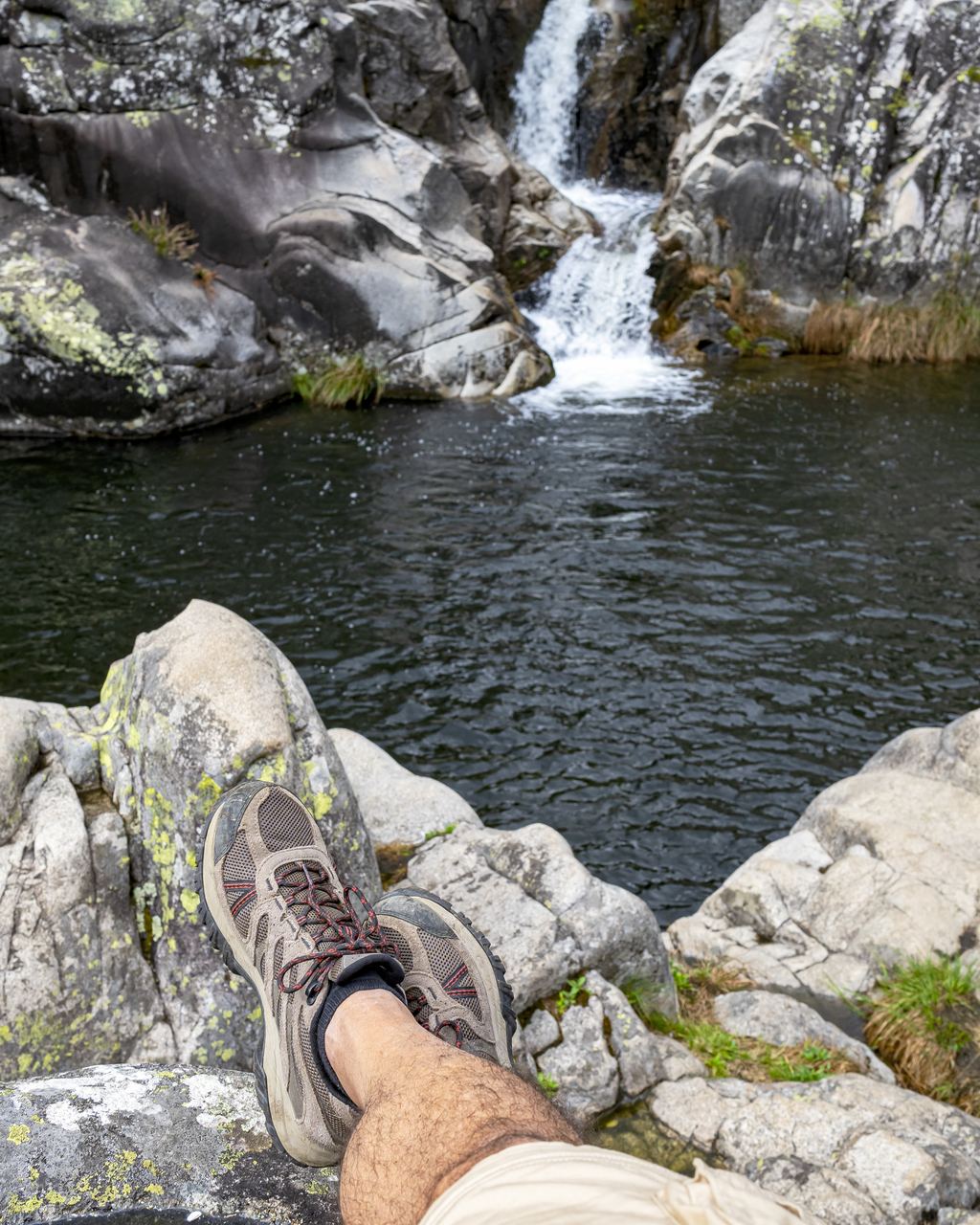
The sites we read agree on the footwear and on almost nothing else. The operator of Dunn's River Falls in Jamaica says the climb is moderate, that the rocks can be slippery, and that proper footwear is essential. Plitvice Lakes National Park says its rocks are exceptionally slippery when wet and names the Šupljara cave as the place to take care. Yosemite National Park goes past wet: stream-polished rocks at the water's edge, it says, may be slippery when wet or dry.
None of the three names a shoe. That is a gap worth noticing, because the gear advice you will meet online is far more specific than anything the sites themselves publish, and the specificity rarely comes with a source attached. Our judgment, and only that: a closed shoe with a tread that bites on wet rock beats flip-flops. No site we read forbids flip-flops. Tours that include the climb at Dunn's River are listed in our Ocho Rios and Falmouth category.
Winter changes the question. The Visit South Iceland tourism site says the paths around Seljalandsfoss can be slippery and that large pieces of ice fall. Mist freezes on the cliffs and on the ceiling of the path behind the waterfall, and chunks come down when it thaws. The same page asks visitors to respect path closures. No shoe fixes a closed path. If you are weighing a day on the South Coast, the Seljalandsfoss and Skógafoss tours are listed, and our guide to waterfall safety rules covers the edge.
Three parks, three warnings about wet stone, and no shoe specification in any of them. Pick footwear that grips, and treat the warning as the rule.
What should you wear if you might get wet?
Clothing is where the sites say least. The one specific line comes from a page about cold water: the National Park Service, writing about hypothermia in the Zion Narrows, tells visitors to avoid cotton clothing because it provides no insulation when wet. It also calls immersion in water the quickest way to cool the body. That page is about a river canyon, not a waterfall viewpoint, so read it as a principle for any day that may end wet.
Getting wet at all depends on the park. Plitvice answers in its FAQ: swimming in the lakes is strictly prohibited, so a swimsuit has no use there. Krka is different. Its FAQ says swimming is permitted only in designated areas at Roški slap, Stinice and Pisak, from 1 June to 30 September, at your own risk. The park's page for Skradinski buk says swimming there is not allowed. Our guide to swimming at a waterfall has the wider picture.
A dry layer only helps if it has somewhere to be used. Dunn's River lists lockers, changing rooms, restrooms and showers on its property. Many sites list nothing of the kind.
How do you keep a phone or camera dry?
Dunn's River's page says waterproof pouches are strongly recommended for the climb. It is the only line of its kind we found on a site's own pages, and it is about a climb through falling water, not a viewpoint. Spray is a different problem. We found no park or manufacturer guidance on protecting a lens from mist, only blogs and forum threads, which we do not use. Wiping the front of the lens often is ordinary photographer practice, and we offer it as our own judgment, not as something a park or a manufacturer told us to do, which is why it sits last and gets one line only.

Where does the bag go while you walk?
A day pack is easy. The question is the rest of it: the jacket, the second bag, whatever you did not want to leave in the car while you spend half a day on a trail and a boat. Four sites answer it in four ways.
| Site | What the page says | Who says so |
|---|---|---|
| Krka National Park (Croatia) | There are no storage facilities for luggage or personal items in the park | The national park, FAQ |
| Plitvice Lakes (Croatia) | An area for leaving luggage exists at Entrance 1, Entrance 2 and the Flora auxiliary entrance; ask at the entrance for details | The national park, FAQ |
| Iguazú, Argentine side | Locker storage is offered inside the visitor facilities | Iguazú Argentina S.A., the concessionaire for visitor services |
| Dunn's River Falls (Jamaica) | The property lists lockers, changing rooms, restrooms and showers | The operator |
Krka is the one to plan around. With no storage inside the park, whatever you bring is what you carry all day, boat rides included, unless you leave it in a car or at your hotel. A tour listing that says bags are not allowed or must stay on the bus is giving you the operator's rule, not the site's. Ask which before you book, and see how to read a waterfall tour listing. The parks themselves are covered in Plitvice Lakes and Krka National Park.
How do you photograph silky water?
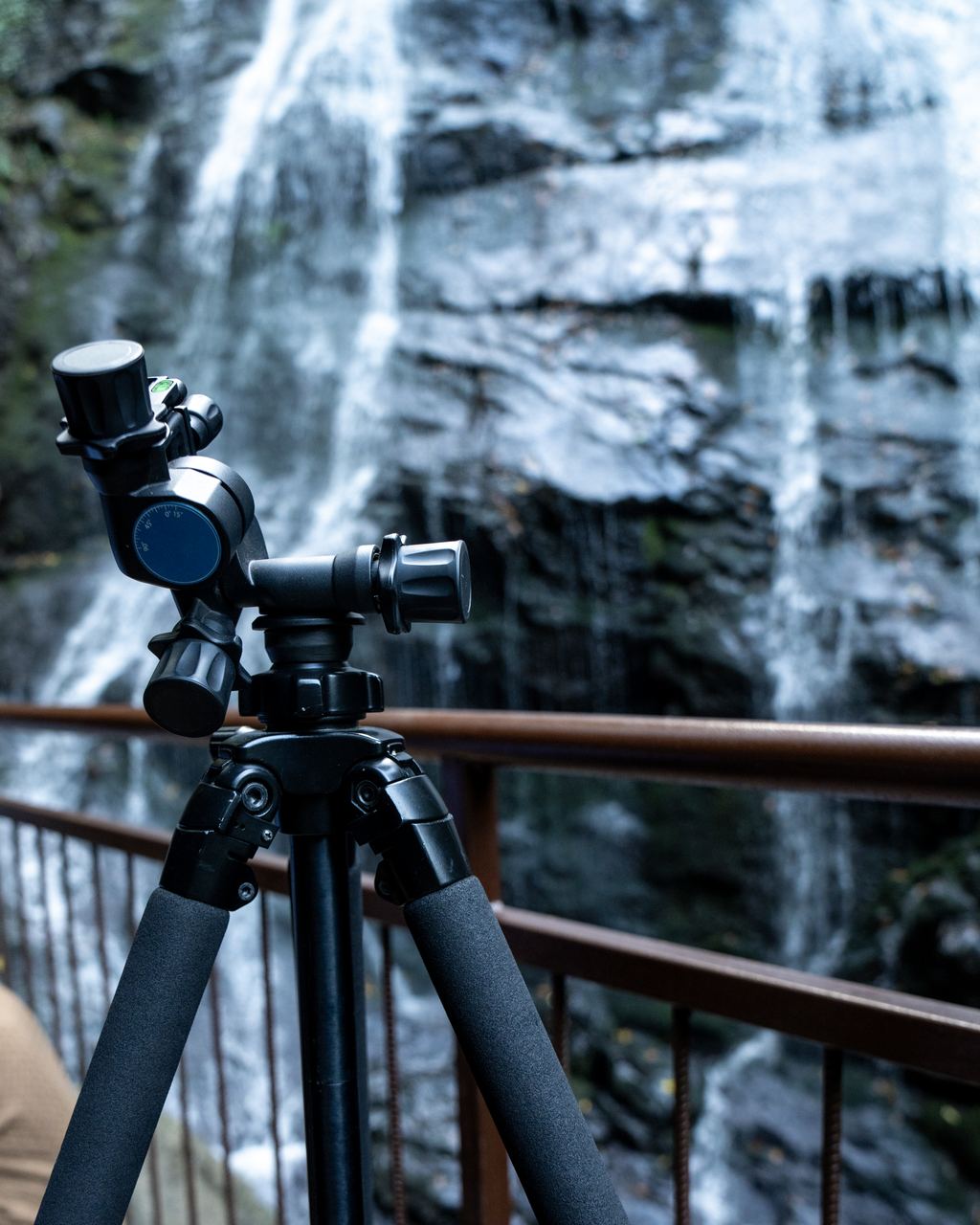
The plainest instruction we found comes from the National Park Service, on a Mississippi National River page about photographing Minnehaha Falls and St. Anthony Falls: use a tripod and a shutter speed of 1/4 to 2 seconds, the smallest aperture and the lowest ISO, and shoot on a cloudy day or after sunset. It is a recipe for modest falls.
Bright light breaks it. Cambridge in Colour works one example in an archived copy of its filter tutorial: a waterfall in soft daylight at f/22 and ISO 100 might give an exposure of 1/10 second. That is too short for silk, and an aperture that small loses sharpness through diffraction. A 5-stop neutral density filter makes the same exposure 32 times longer; a 4-stop filter, 16 times. Each stop halves the light.
Tripods are a gap in the sources. The Plitvice and Krka pages we read do not mention them. Both ask for a request or approval before commercial photography or filming, and we did not find a definition of commercial on either. Silence is not permission. If you plan to shoot from a tripod in a park, ask the park.
Can you fly a drone at a waterfall?
Sometimes. The rule that matters is rarely the one on your app. There is no universal ban and no universal permission. In the United States the FAA says its No Drone Zone signs restrict only taking off and landing, not flight in the airspace above, and that airspace authorization does not mean land use approval. A clear sky can sit over a launch spot where you may not start. The FAA page is the source. The National Park Service adds that Policy Memorandum 14-05, issued in June 2014, directed each park superintendent to prohibit launching, landing or operating uncrewed aircraft. Its page on the subject, last updated May 22, 2025, says the policy is still in force with a few exceptions and that NPS jurisdiction ends at the park boundary.
| Site | What the page says | Who says so |
|---|---|---|
| Plitvice Lakes (Croatia) | Remotely controlled aircraft for filming from the air are banned | The national park, rules of conduct and FAQ |
| Krka (Croatia) | Drones are not permitted, including for short personal use | The national park, rules and FAQ |
| Yosemite (United States) | Launching, landing or operating an unmanned aircraft within the park boundaries is prohibited | Yosemite National Park, NPS |
| Hawaii state parks (United States) | The use, launching or landing of drones or other aircraft is prohibited | Hawaii Division of State Parks |
| Niagara Falls, Canadian side | Drones are not permitted on Niagara Parks property unless authorized with a permit; the airspace above the Falls on the Canadian side is a Transport Canada restricted area | Niagara Parks |
| Vatnajökull National Park (Iceland) | Recreational drones are generally allowed with regional restrictions; banned around Svartifoss; allowed at Dettifoss on the west side only within time windows that vary by season | The park, now under the Nature Conservation Agency of Iceland |
| Iguazú, Argentine side | Flying motor-driven aircraft inside protected areas is prohibited under the national parks law | Argentina's national parks administration, FAQ |
| Columbia River Gorge (United States) | A Forest Service order prohibits landing aircraft, a term that includes drones, at developed recreation sites such as the Multnomah Falls area; in force from July 15, 2026 to July 15, 2028 | US Forest Service, archived copy |
Read as a set, the rows show three kinds of rule. Some parks ban the thing outright, as the Croatian parks and Yosemite do. Some ban a part of it: Niagara Parks requires a permit on its land and sits under federal restricted airspace, and the Forest Service order in the Columbia River Gorge bans landing, which is what a drone does when you bring it home. Iceland shows the third kind, a map of zones and hours. Its page also says Vatnajökull is now under the Nature Conservation Agency and the agency's website is still being developed, so that row is the likeliest to be out of date.
Sources for the rows: Plitvice rules, Krka rules, Hawaii state park rules, Niagara Parks drone notice, Vatnajökull drone rules, Argentina's parks FAQ and the Forest Service order. The Forest Service site refused our direct request, so that row comes from the archived copy.
Drone rules change and differ by site and by country. Check the site's current rules and your aviation authority before you fly.
What did we leave out, and why?
Sunscreen, insect repellent and rain gear for boats and helicopters are missing. No site we read gives a rule for any of them, so we give none. For a boat or a flight, the operator's own list of what to bring is the document that counts. Our guide to planning a waterfall trip links the other pages in this section, and Krka or Plitvice compares the two Croatian parks on the points above.
Quick answers
Do I need water shoes at Dunn's River Falls?
The operator's page says proper footwear is essential and that the rocks can be slippery. It does not name a type of shoe. Read on 2026-10-27; check the page before you go.
Is there luggage storage at Krka National Park?
The park's FAQ says there are no storage facilities for luggage or personal items in the park. Plitvice, by contrast, names an area for leaving luggage at its entrances.
Can I fly a drone at Niagara Falls?
Niagara Parks says drones are not permitted on its property unless authorized with a permit, and the airspace above the Falls on the Canadian side is a Transport Canada restricted area. We did not read a rule for the American side.
Data verified on . Read on each authority's own page on 2026-10-27, except two archived copies (Forest Service order, photo tutorial). Rules change: check the official site. Editorial Policy
Guided day trips to Seljalandsfoss
We earn a commission if you book through this link. Whether the path behind the waterfall is open is the site's decision either way.