
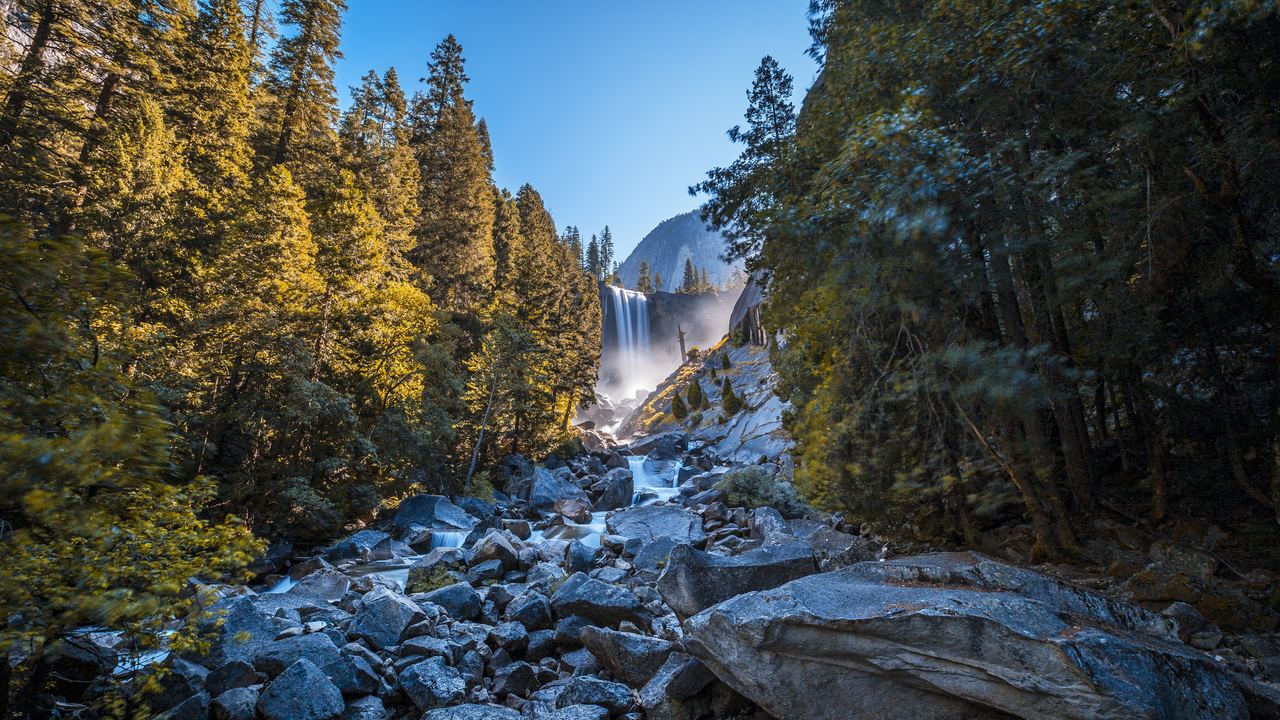
Yes, and the official pages say it in the same few ways. A waterfall hurts people at its edge, on the rock around it, in the water above it and in the weather that feeds it. We read what park services in the United States and Australia, and a regional tourism board in Iceland, publish about each of those on 2026-10-27, and we mark every line that is our judgment and not theirs.
This page gives general information from the sources named on it, as we read them on the dates shown. It is not medical, legal or safety advice. Rules and conditions at a waterfall can change within hours: follow the signs, the park and your guide, and see a doctor or your public health authority for health questions.
What is the rule about the top of a waterfall?
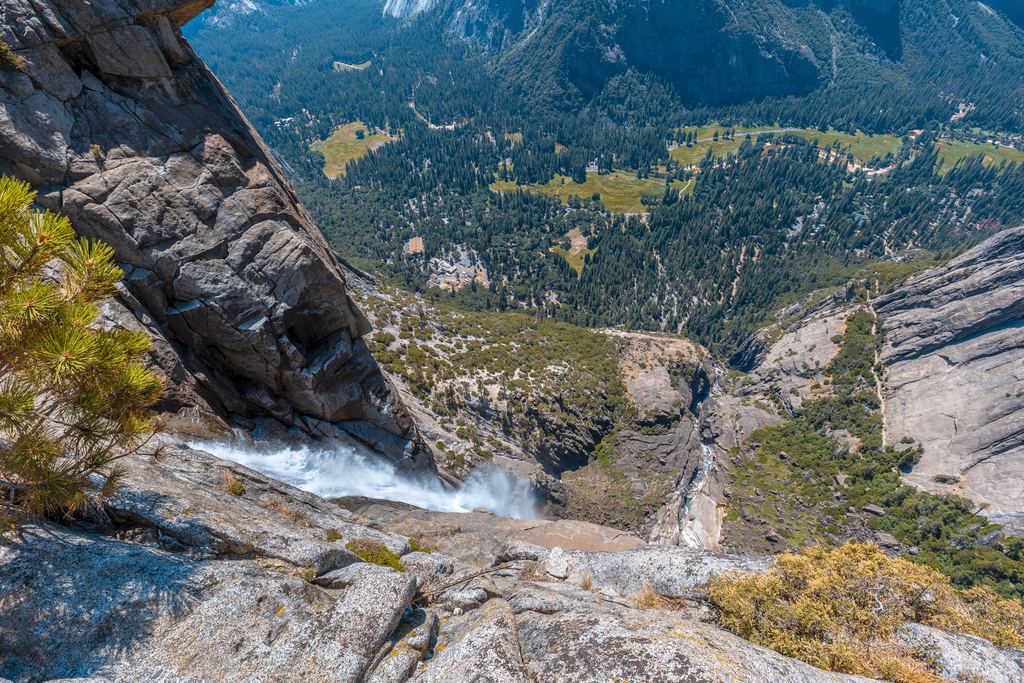
Never swim or wade upstream from the brink of a waterfall, even if the water appears shallow and calm. Each year unsuspecting visitors are swept over waterfalls to their deaths when swimming in these areas.
That sentence carries the rest of this page, and it comes from the Yosemite National Park safety page, last updated December 3, 2025. Look at the verbs. The park does not say the fall is the danger. It says the water above the brink is, even when it looks shallow and calm. The same page tells visitors to swim only in low water, to stay out of whitewater, and to never cross above rapids or falls.
Why does calm water above a fall look harmless?
Yosemite's wording describes the trap itself: water that appears shallow and calm. In our reading, that is the whole problem. Nothing visible marks the point where the current stops giving you a choice, and from the bank the surface of a slow pool looks the same as the surface a few steps before a drop. That reading is ours. The park's sentence does not explain itself.
If you cannot see where the water leaves the ledge, stay on the bank.
How slippery is the rock around a waterfall?
Three sources single out the surface under your feet, and the parks service of New South Wales is the most specific, because it says that rocks and paths around waterfalls can be extremely slippery and lists hidden hazards such as submerged rocks, branches and debris. Yosemite says rocks polished by a stream can be slippery wet or dry, and it advises against rock hopping in high water. The Dunn's River Falls site says the rocks of its climb can be slippery and calls proper footwear essential.
Where a source gives a reason, it is the same one. The surface.
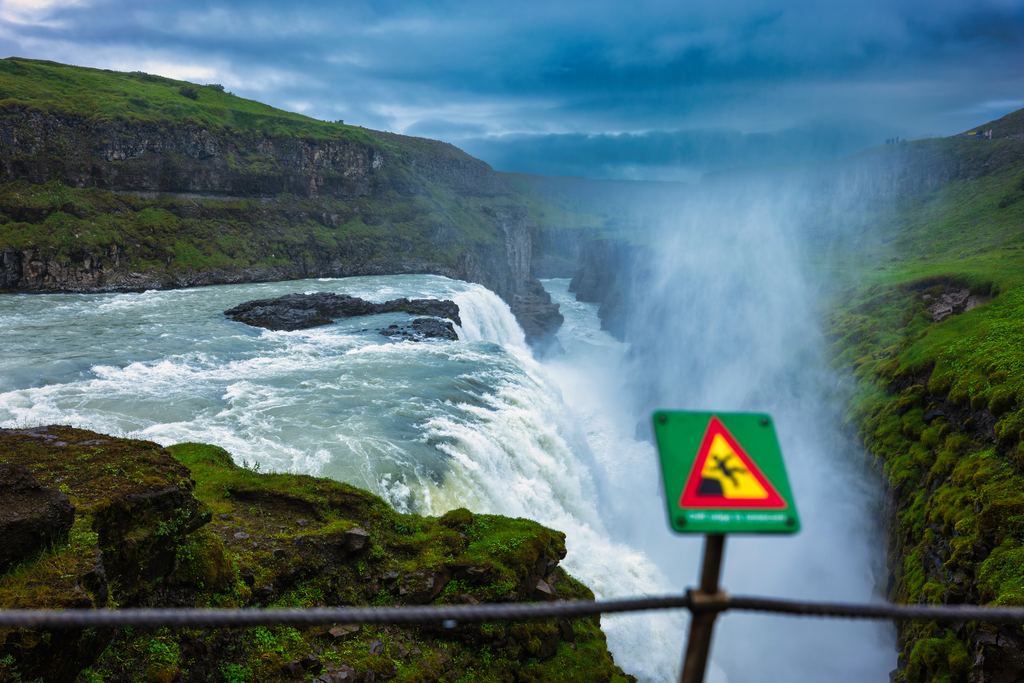
The New South Wales page is also the plainest about barriers. It says to stay behind railings and barriers, that they are there to prevent falls, and not to risk your life for a selfie. We have nothing to add to that. We would only point out that a selfie is the one hazard on this page that the visitor brings along.
| Hazard | What the page says | Who says it |
|---|---|---|
| The brink | Never swim or wade upstream from the brink, even if the water looks shallow and calm | Yosemite National Park (NPS) |
| Wet and dry rock | Stream polished rocks can be slippery wet or dry; rocks and paths around waterfalls can be extremely slippery | Yosemite National Park (NPS); NSW National Parks |
| Edges | Stay behind railings and barriers, which are there to prevent falls | NSW National Parks |
| Snowmelt | In summer, rivers and creeks swollen by snowmelt are dangerous: powerful current, icy water, obstructions | Yosemite National Park (NPS) |
| Flash flood | The river can double or triple in volume; speak with a ranger and check flash flood potential | Zion National Park (NPS) |
| Cold water | Hypothermia is a greater hazard in narrow canyons because immersion cools the body fastest | Zion National Park (NPS) |
| Winter ice | Large pieces of ice fall around Seljalandsfoss and the paths can be slippery | Visit South Iceland (regional tourism board) |
| Rockfall | Use caution on or immediately below cliffs | Yosemite National Park (NPS) |
What do park services say about high water?
Yosemite is direct about the season. In summer, it says, rivers and creeks swollen by runoff from snowmelt are dangerous, with powerful current, icy water and obstructions that can trap people, and it tells visitors to stay away from banks in high water. A waterfall in snow country is at its fullest and coldest at exactly that time. That link is our inference, and the page does not draw it.

Why does a clear sky not rule out a flood?
The Zion pages are about the Narrows, a slot canyon where people wade the river, not about a waterfall. We use them for the principle. The rain is elsewhere. Zion National Park says flash floods are often caused by storms miles away, that the water level can rise within minutes or even seconds, and that a flood can rush down a canyon in a wall of water 12 feet high or more. A second Zion page says the river can turn into a torrent doubling and tripling in volume, and asks hikers to watch for changes in water clarity and flow.
The advice is short. Speak with a ranger at the visitor center, read the conditions, the forecast and the flash flood potential before you start, and if bad weather threatens the area, do not enter narrow canyons. The park also calls hypothermia the number one killer of outdoor recreationists, even in summer, and says it usually happens without the victim noticing. Our judgment, and nobody else's: when the clarity or the volume of the water changes while you stand there, change the plan. No source we read gives a number for that, and we have not made one up.
A page about a canyon river is still the best evidence we have about a stream above a waterfall.
What changes at a waterfall in winter?
The regional tourism board Visit South Iceland describes one waterfall in detail. In winter, it says, the paths around Seljalandsfoss can be slippery and large pieces of ice fall, which makes it extremely dangerous to go close to the cliffs and particularly dangerous to walk behind the fall. Spray freezes on the cliffs and on the ceiling of the path behind the water, and when the weather warms the ice can come off in large chunks. The thaw is the trigger. The board advises visitors to respect path closures. It is a tourism board, not the landowner, so we cite it for what it describes and not for who may close what.
How ice behaves at other falls, and why some of them are closed for a season, is the subject of our guides on snowmelt, ice and frozen falls and on what to do if a waterfall is closed.
What do the sources tell visitors to do?
| Advice on the page | Who says it |
|---|---|
| Stay behind railings and barriers; check park alerts, closures and the forecast before you leave home | NSW National Parks |
| Swim only in low water, and never upstream from the brink | Yosemite National Park (NPS) |
| Avoid rock hopping in high water; never cross above rapids or falls | Yosemite National Park (NPS) |
| Speak with a ranger before a narrow canyon and read the flash flood potential | Zion National Park (NPS) |
| Do not enter narrow canyons if bad weather threatens | Zion National Park (NPS) |
| Supervise children closely | Yosemite National Park (NPS) |
| Keep children with an adult near the water | Dunn's River Falls site |
Every line in that table comes from a page we opened, and each can be checked in a minute. What follows is ours. We would decide at home where the exit is, and who stays with the youngest child, before the first rock. It takes five minutes, and none of the services above asks for it in those words.
What does this page not tell you?
Three limits. We found no official count of deaths at waterfalls that we could open, so we print none, and we distrust any page that does. The rules above come from parks with rangers, signs and rescue services, and many waterfalls in our catalog have none of the three. For several of them we could not open any official safety page at all, and a missing page is not a missing hazard. At those places, we treat the Yosemite sentence as the minimum.
This page links to no tour listings on purpose. How to read a site's swimming rules is a separate question, and so is what to expect with children or limited mobility, what to bring and whether a guide is needed. They sit under our trip planning section.
Quick answers
Is it dangerous to swim above a waterfall?
Yosemite National Park tells visitors never to swim or wade upstream from the brink of a waterfall, even if the water appears shallow and calm. Its page was read on 2026-10-27. Our swimming guide covers what individual sites allow.
Do railings at a waterfall matter?
NSW National Parks says to stay behind railings and barriers because they are there to prevent falls. Read on 2026-10-27.
Should I ask a ranger before walking a river canyon?
Zion National Park says to speak with a ranger, read the forecast and flash flood potential, and not to enter narrow canyons if bad weather threatens. That advice is written for the Narrows, a slot canyon. Check the official site of the place you are visiting.
Can ice around a waterfall fall on you?
Visit South Iceland says large pieces of ice fall around Seljalandsfoss in winter, and that it is particularly dangerous to walk behind the fall. Details for other falls are in our guide to snowmelt and ice.
Data verified on . Each rule was read on 2026-10-27 on the page named beside it. Lines marked as our judgment are ours. Pages change: check the official site before you go. Editorial Policy
Choosing a tour is a separate decision
Our checklist for reading a tour listing says what to look for before you book anything.