
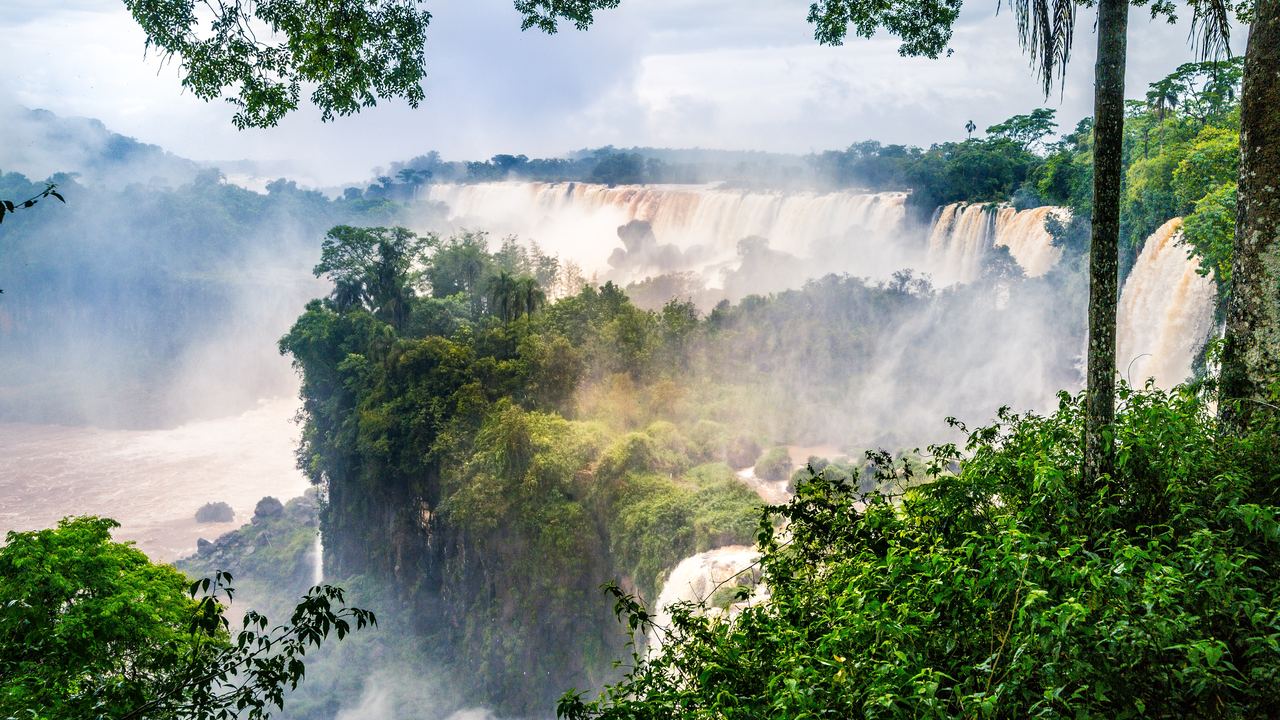
A waterfall visit comes down to four facts: how many steps there are, what the surface is, how far you walk, and whether there is a place with a flat view. Wheelchair users and parents with strollers need the same four. Most sites publish none of them. We found official statements for six sites, and one park, Krka, publishes a whole document on the question. For every other site this page says not confirmed, and it means exactly that.
This page gives general information from the sources named on it, as we read them on the dates shown. It is not medical, legal or safety advice. Rules and conditions at a waterfall can change within hours: follow the signs, the park and your guide, and see a doctor or your public health authority for health questions.
What should you check before choosing a waterfall?
Five checks do most of the work. First, steps: whether there are any between the car park and the nearest view, and how many. Second, the surface: planks, packed gravel, uneven stone slabs or wet rock. Third, distance, with places to stop on the way. Fourth, whether one viewpoint can be reached without the hard part of the walk. Fifth, supervision, because the sources we read that mention children all say the same thing: an adult stays close. Simple, and easy to forget.
For the surface and the slope there is an outside yardstick. The US Access Board, which writes federal accessibility guidelines, sets out requirements for new or altered trails in outdoor recreation areas in its guide to outdoor developed areas. The surface must be firm and stable. The clear tread width must be at least 36 inches. A trail may run at a slope up to 1 in 20, which is 5 percent, for any length; steeper segments are allowed only in short lengths with resting intervals, and the slope may never exceed 1 in 8. These are design rules for American federal sites. They are not a rating of any waterfall in this guide, and no operator we read says its path meets them. They are useful as a ruler: a path described as steep, or made of loose stone, is probably outside them.
The useful question for a site is never whether it is accessible. It is how many steps, what surface, how far, and where you can sit.
| Site | Steps and surface, as the operator states them | Loan equipment or transport named | Who says so |
|---|---|---|---|
| Niagara, Canadian side | Lower deck at Journey Behind the Falls by stairs only; flat wooden boardwalk at the White Water Walk | Limited wheelchairs on loan; elevators | Niagara Parks |
| Iguazú, Argentine side | Inferior circuit has stretches with stairs; three other circuits listed as fully accessible | Wheelchairs at train stations; golf-cart shuttle; stroller rental | Iguazú Argentina S.A. |
| Iguazú, Brazilian side | Trail not recommended for wheelchair users because of stairs; panoramic elevator at Porto Canoas | Wheelchairs lent at the Visitor Center; internal bus | Urbia Cataratas SA |
| Krka | Skradinski buk path of wooden planks and macadam, mostly without railings; uneven stone slabs at the lookout | Bus with ramps in season; boats without ramps except Roški slap to Visovac | The national park, PDF |
| Plitvice Lakes | Not all paths and trails are accessible; no steps or lengths given | Staff at the entrance suggest a route | The national park, FAQ |
| Dunn's River Falls | Some wheelchair accessibility with a viewing deck | Viewing deck | The operator |
What does the Niagara operator say?
Niagara Parks publishes the most itemized page of the big falls. Its accessibility page says Journey Behind the Falls is partially wheelchair and scooter accessible. Elevators take you down to a set of tunnels, and the tunnel straight ahead leads to the upper and lower observation decks. The page then draws a line: the lower deck can be reached only by stairs, which it puts at about 18 steps, and the view from the upper deck is described as still worth the trip.
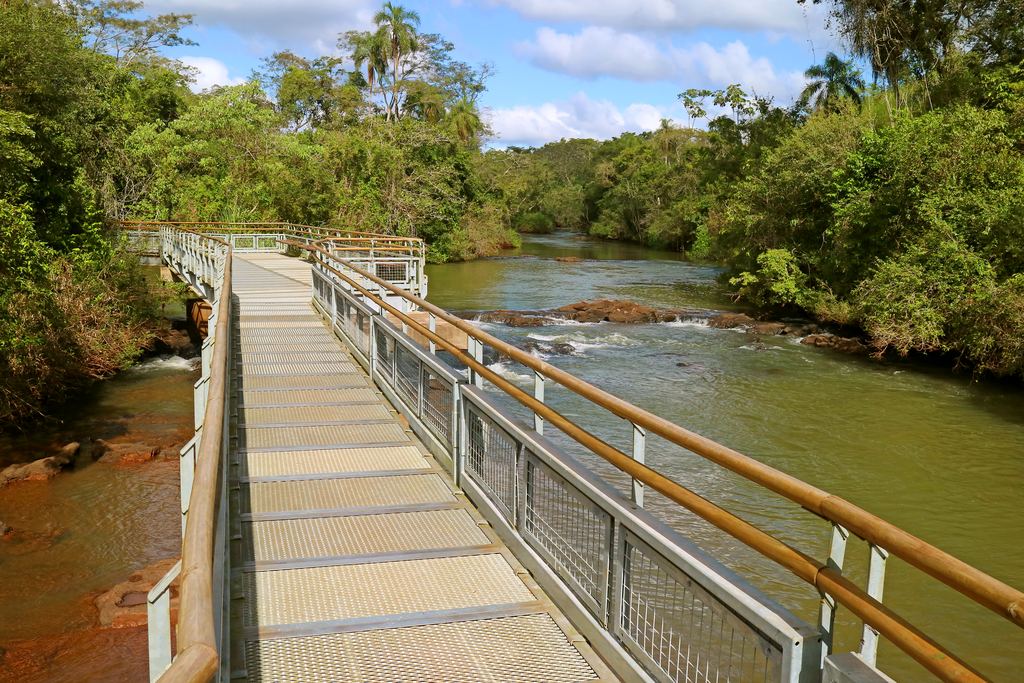
The White Water Walk gets the same treatment. The page says that only the length of the main boardwalk is accessible, that an elevator takes you down to a tunnel and onto a flat wooden boardwalk, that two small lower viewing decks can be reached only by stairs, and that benches stand at the beginning and end of the boardwalk. Wheelchairs are available on loan at the Table Rock Welcome Centre on a first-come, first-served basis, in limited numbers, and the page suggests bringing your own if you can. Two things are missing from the page: a rule for strollers, and any statement about the American side, which a different operator runs. Neither is a small gap. For choosing a side, see which side to visit at the border falls.
How do the two sides of Iguazú differ?
On the Argentine side, Iguazú Argentina S.A. runs the visitor services under concession. Its FAQ says the Superior circuit, the Garganta del Diablo circuit and the Sendero Verde are fully accessible, and that the Inferior circuit has some stretches with stairs. Wheelchairs are available at the train stations; they are not electric and need a companion to push. A golf-cart service takes people with reduced mobility from the entrance to the Central Station to board the train. For strollers, the FAQ describes a rental service at the park entrance for small children. It does not state a rule about bringing your own. The concessionaire also lists the park's walks as meant to be used under the supervision of the adults in charge. Its accessibility page adds a "commitment" to universal access to 80 percent of the park. That is a goal on a promotional list, not a survey, and we do not use it.
The Brazilian side is run by Urbia Cataratas SA, also a concessionaire. Its accessibility page says the park has accessible transport and main viewpoints, and that conventional wheelchairs are lent at the Visitor Center on request. For wheelchair users it recommends riding the internal bus to the last station, Porto Canoas, where a viewpoint and a panoramic elevator lead to the walkway. It also says that doing the trail is not recommended for wheelchair users because of the stairs and a route of about a kilometer. The two operators agree on more than they disagree on, but the advice is not interchangeable: one side lists three circuits as accessible, the other points you to a bus stop. Plan each side separately.

What does Krka's own document say?
Krka National Park is the exception to the silence. It publishes a PDF, The possibilities of visiting for people with reduced mobility, with a verdict for each place. It carries no date, so treat the details as a snapshot and check the park.
At Skradinski buk, the document says, the pedestrian path of 1,900 meters has surfaces of small wooden planks, mostly without railings, and macadam. From April to October the park runs a bus from Lozovac to Skradinski buk, equipped with ramps for wheelchairs. The paving at the imperial lookout point and the stone bridge consists of uneven stone slabs, with ramps for wheelchairs. For one stretch the document adds that the last possibility for visiting Skradinski buk is not recommended for people using wheelchairs, and in several places it recommends a personal escort for the ascent and descent. Details matter here.
The detail that surprised us is the boats. The boats on the river have no access ramps because the water level oscillates, so boarding and disembarking are done one person at a time with the help of park staff. Boats from Roški slap toward Visovac, by contrast, have a wheelchair ramp and marked spots. The park's page for Skradinski buk also mentions a tactile map at the imperial lookout. For how Krka compares with the other Croatian park, read Krka or Plitvice.
What do Plitvice and Dunn's River say?
Plitvice Lakes says very little, and what it says is careful. The park's FAQ states that the areas included in the regular tours and the location of the lakes do not allow wheelchair access throughout the park. At the entrance, it says, staff can recommend the most accessible route for a person using a wheelchair or with impaired mobility, because not all paths and trails are accessible to people with disabilities. It gives no lengths, no steps and no surfaces. Silence like that is information too. Ask.
The operator of Dunn's River Falls says the park has some wheelchair accessibility with a viewing deck, that the climb is optional and considered moderate, and that children should always be supervised by an adult near the water. It also mentions a splash pad for small children. The climb itself is the part the page does not describe as accessible, so the deck is the answer for anyone who cannot do it. That is the whole offer.
What about children and supervision?
The sources that mention children say one thing in three ways, and none of them reads like a rulebook, more like a sentence somebody felt obliged to include on the way to the details that fill the rest of this page. Yosemite National Park lists "always supervise children closely" first under its water safety tips on its safety page. Dunn's River asks for an adult near the water. Close, in other words. The Argentine side of Iguazú describes its walks as meant to be used with adults in charge.
What we did not find is a rule by age for walking a path. The age bands that appear on tickets and tour listings are set by each operator and differ even between listings of the same activity, so we leave them out. A listing that names a minimum age is giving you the operator's rule, not the waterfall's. Our guide to canyoning for first-timers shows how far those rules diverge. The guide to waterfall safety rules covers the edge and the water.
Which sites did we find nothing for?
For Victoria Falls on both sides, Seljalandsfoss, Skógafoss, Gullfoss, Montmorency Falls, Ouzoud, Kravica, La Fortuna, Wadi Shab, Erawan, Tegenungan and Multnomah we did not find a page by the site's operator that addresses wheelchairs or strollers. Some of those pages refused our request outright. Listings on booking and review sites label the same places accessible or not in contradictory ways, so we use none of them. Not confirmed does not mean inaccessible. It means we cannot tell you, and neither, we think, can a listing that does not name an operator. No guessing.
How do you ask a site the right question?
Write to the operator, or phone, before you commit a day to a drive. These five questions are our own, drawn from the checks above, and any operator should be able to answer them in a sentence. Ask how many steps lie between the entrance and the first view of the water, what the surface is along the way, how long the walk is and where the benches stand, whether the site lends wheelchairs and lets you reserve one, and whether the lift or the shuttle runs on the day you plan to come.
An answer that says only that the place is accessible has told you nothing. Push for numbers. A site that can tell you the surface and the steps has probably thought about it. Whether a tour changes the answer depends on the operator: a guided day adds a vehicle and a schedule, and whatever the site itself does or does not provide stays exactly the same. Our guide on do you need a tour sorts what a tour can and cannot do. Our waterfall fit guide and the listing checklist go further on choosing, and the planning section links the rest.
Quick answers
Does Plitvice Lakes list steps or path lengths for wheelchair users?
No. The park's FAQ says wheelchair access is not possible throughout the park and that staff at the entrance can suggest the most accessible route. Read on 2026-10-27; ask the park for details.
Which park publishes a document on reduced mobility?
Krka National Park publishes an undated PDF with a verdict for each place, including the boats. Check the park's site for the current version.
Can you bring a stroller to Iguazú on the Argentine side?
The concessionaire's FAQ describes a stroller rental service at the park entrance for small children. It does not state a rule about bringing your own, so ask before you travel.
Data verified on . Read on each operator's own pages on 2026-10-27. We rate no site. Details change: check the official site and ask the operator before you go. Editorial Policy
Check what the site itself offers before you book a tour
A tour adds a vehicle and a schedule, not access. Our guide to what sites require and what tours replace comes first.