
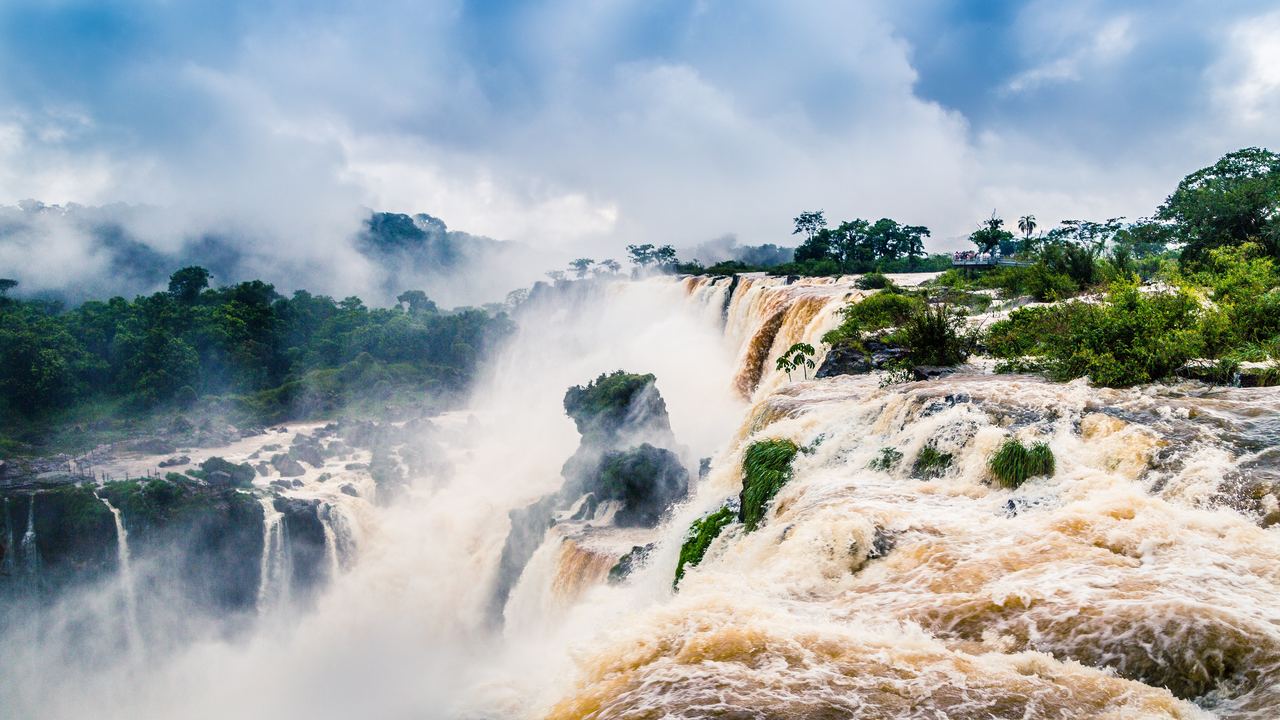
Cornell Lab of Ornithology says the American dipper has even been known to place its nest behind a waterfall. About the black swift it says something stronger: the bird nests on ledges behind waterfalls, typically in dark and inaccessible places. One word separates the two birds, and it tends to go missing from captions and tour blurbs. This page keeps the words where the sources put them.
It covers the birds, one family of fish and the plants of the spray zone, and it leaves out anything we could not trace to an open source. That shortens the list. We found no open source that names the animals of the spray at Victoria Falls, no ornithological source for the swifts of Iguazú, and none that places black swifts at any waterfall we sell. We read the pages cited below on 2026-10-27, the Cornell pages through the Internet Archive because the originals refused our request.
We earn a commission when you book a tour through the links to our Iguazú Falls, Victoria Falls, Plitvice Lakes and Maui pages, at no extra cost to you. No tour listing is a promise of wildlife, and nothing here says where to find any animal named below. How we are paid is explained in our Editorial Policy.
What does a dipper do at a waterfall?
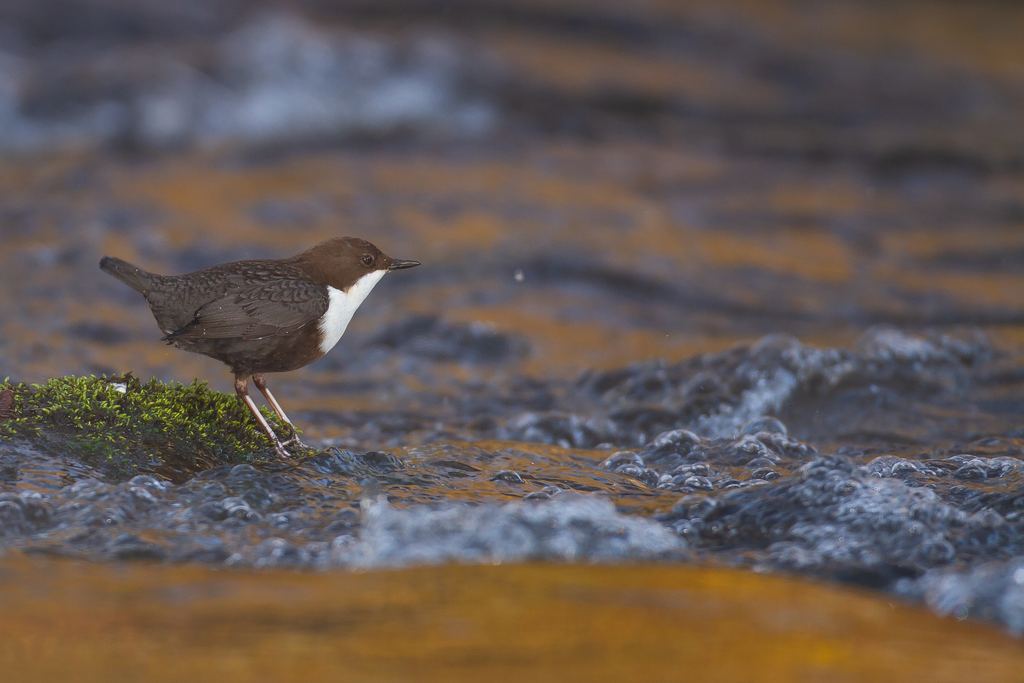
A dipper feeds in fast, cold water. The American dipper walks along the streambed with its head under, often with its wings outstretched for traction against the current, according to Cornell. The Park Service at Rocky Mountain National Park says it is capable of flying through waterfalls. Cornell puts the bird's range in fast mountain streams and cold coastal streams of western North America and Central America, and says a dipper can stay under for up to 15 seconds at a time.
Nests are another matter. Cornell lists boulders, cliff ledges, fallen logs, overhanging banks and bridges or culverts first and mentions waterfalls last. Rocky Mountain National Park lists ledges and banks along streams, or behind waterfalls, and adds that nests have most recently been found under bridges. Behind a waterfall is a recorded choice, and Cornell's wording marks it as unusual. The entrance of the domed nest always faces the water, so a parent nesting there has to fly straight through falling water to reach the young. The spray keeps the moss on the outside of the nest alive, the Park Service notes. A pair raises 4 to 5 eggs, and the nestlings leave after 24 to 26 days. The bird in the photo is a white-throated dipper, a different species from the American dipper that the sources describe.
Which swifts nest behind waterfalls?
The black swift does, by habit. Cornell life-history page describes a bird that nests on cliff and rock ledges behind waterfalls, typically in dark and inaccessible areas, in a cup of moss and mud that, unlike other swifts' nests, is not held together with saliva. One egg, one brood. Incubation takes 23 to 30 days and the nestling stays 45 to 50. Cornell also reports that the species has lost more than half of its population over the past five decades, and lists it as an Orange Alert Tipping Point species.
Its dependence on waterfalls is what makes it hard to protect. The Montana Natural Heritage Program's 2025 rank report says waterfall nest habitat in the state is extremely limited, probably 4 to 20 square kilometers in all of Montana, and that little is known about nesting areas. Oregon's Conservation Strategy, a draft pending approval from the US Fish and Wildlife Service, ties the nests to waterfalls with limited light and lists, among its actions, limiting human disturbance at waterfall nest sites and maintaining water flow at occupied ones.
We will not tell you where to look for black swift nests, because the one conservation plan we read asks for less disturbance at nest sites.
Iguazú has its own swifts, in one source. A narration transcript that UNESCO hosts for the Iguazú World Heritage site, written by the broadcaster NHK, says the great dusky swifts nest behind the falls and that the curtain of water keeps predators out. It is a broadcaster's script, not a field study, and we found no open ornithological source for Iguazú that confirms it. Read it as a lead, not a count. The transcript is on UNESCO's site if you want the wording.
What lives in the spray at Victoria Falls?
Less than the pictures suggest. UNESCO's Outstanding Universal Value statement, read through an archived copy because the original refused our request, describes a spray plume about 500 meters high at its maximum, visible from 50 kilometers on the Bulawayo road and 30 on the Lusaka road. Within the splash zone it places a riverine rainforest on sandy alluvium, a fragile ecosystem that depends on abundant water and high humidity. It also lists the eight gorges and several islands in the core zone as breeding sites for four endangered and migratory bird species, such as the Taita falcon and the black eagle.
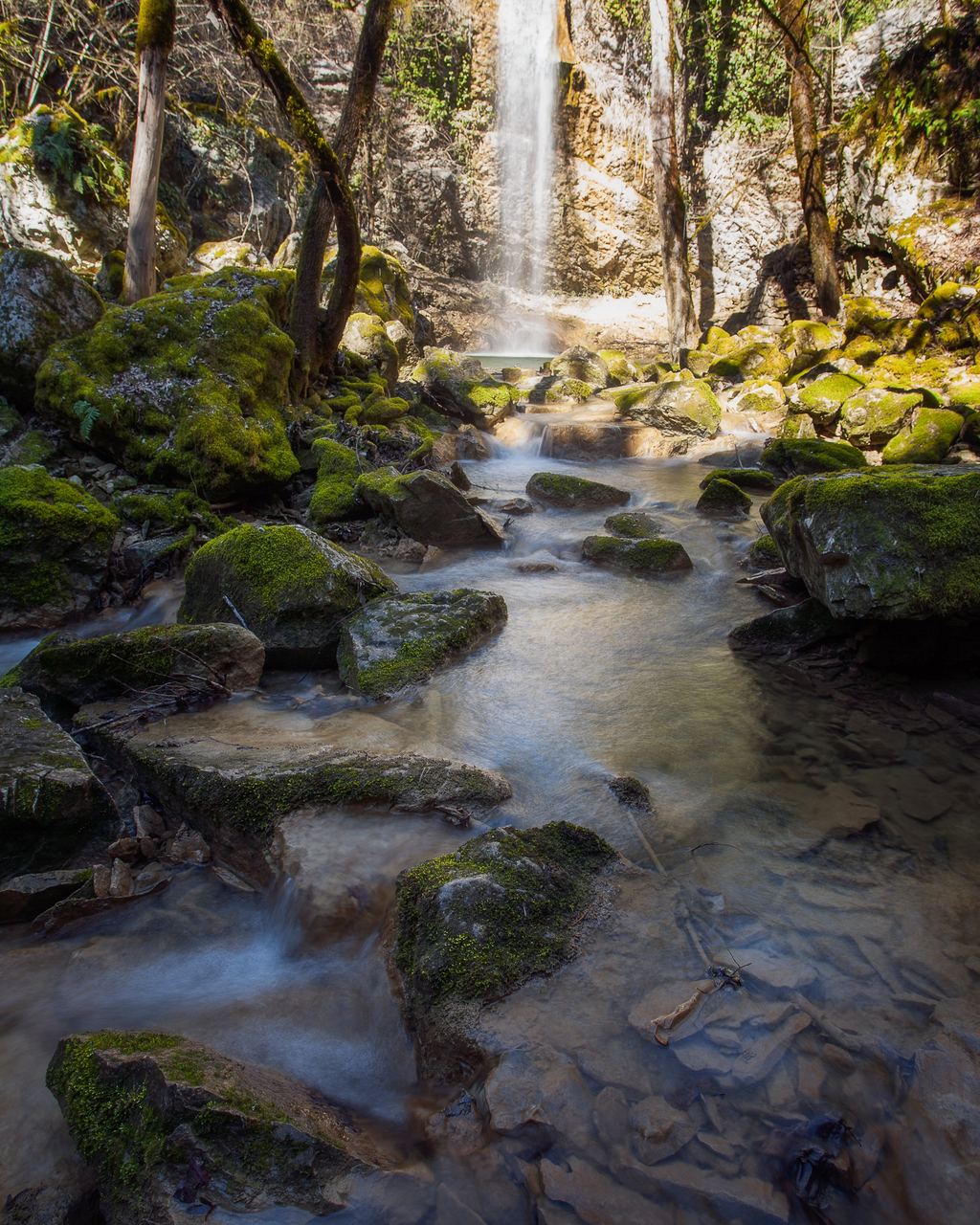
That is all the open record we found. No source we read lists the animals of the spray itself, and the 1989 IUCN evaluation that names the forest's plants is a scanned document whose text we could not read reliably. A page that listed the animals of the mist would be guessing. For the terms, the waterfall glossary shows that UNESCO's splash zone and a spray zone are the same idea written two ways.
Do plants and lichens thrive in waterfall spray?
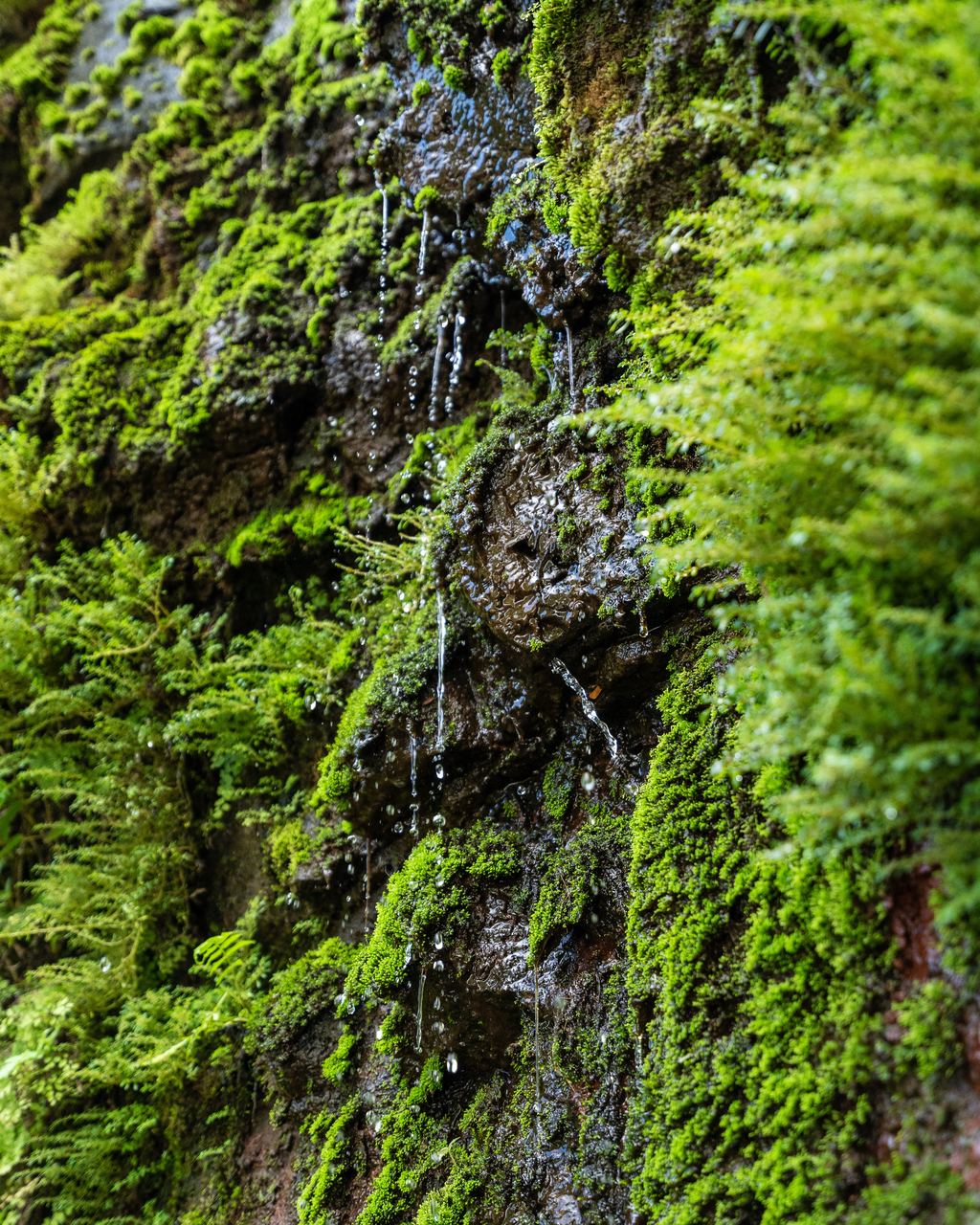
Mosses and lichens, mostly. A report in British Columbia's Living Lab program, by Curtis Björk, Darwyn Coxson and Trevor Goward, inventoried six waterfalls in and next to Wells Gray Provincial Park in 2023 and 2024 and compared each spray zone with a control site nearby, usually upstream. The spray zones held 994 species against 624 at the control sites, and 550 species turned up only in spray zones against 179 only at the controls. Lichens, mosses and liverworts drove the gap: at Dawson Falls the cryptogams were 4.4 times as diverse in the spray as outside it.
Vascular plants went the other way in places. At Are, Dawson, Moul and Triple Decker Falls the comparison sites had more vascular plants than the spray zones, and at Triple Decker overall richness was not higher in the spray at all. Of the species the report calls rare in British Columbia, 72 grew in spray zones and 8 outside them, and 58 spray-zone species could not be named to species and may include some new to science. At Are Falls the midday temperature beside the water was up to 10 °C cooler than the nearby upland on hot summer days.
So the usual line that spray means ferns and moss everywhere is half right. It holds for mosses and lichens, and the report does not support it for ferns and other vascular plants. One caution: this is six waterfalls in one region, and we found no comparable open data for Victoria, Iguazú or any other falls we sell.
The mosses can also build the waterfall. The Plitvice Lakes park names Palustriella commutata as the species that most often takes part in building tufa and says it is quickly petrified while the moss keeps its shape; in calmer water a second moss, Ptychostomum pseudotriquetrum, builds the tufa. Our page on tufa and travertine waterfalls has the rest, and the park's own tufa page has the biology. The tours are on the Plitvice Lakes page.
Can fish climb a waterfall?
Some can. Hawaii has the best-documented cases we found. The Division of Aquatic Resources of the state's Department of Land and Natural Resources says the fused pelvic fins of the native gobies are adapted to rocky, steep, flashy streams and are used for climbing large waterfalls. One species, the ʻoʻopu alamoʻo, is known to migrate up the 420-foot Akaka Falls on the Big Island. The adults lay their eggs in the stream, the larvae are swept out to sea, and the young return upstream, often climbing several waterfalls on the way. Unlike salmon, the department notes, the gobies do not return to the stream where they were born.
The University of Hawaii at Mānoa reported in 2023 that the ʻoʻopu nākea, one of five endemic freshwater fishes with fused pelvic fins that work as a suction cup for climbing waterfalls, still depends on the ocean: every fish the team analyzed had spent its larval stage in saltwater. Other heights for the climb circulate on signs and blogs. We use the department's figure and nothing else. Our Maui pages list waterfall tours, but no source we read says where a visitor could watch the fish climb.
When do salmon jump waterfalls?
The Park Service gives dates for one place. At Salmon Cascades in Olympic National Park, it says, look for coho salmon in September and October and for steelhead trout from late March through May, and both kinds are anadromous, born in the Sol Duc River, spending most of their lives in the Pacific and returning to spawn. Heights are shakier. NOAA Fisheries says Atlantic salmon can leap up to 12 feet, and that the species is endangered in the United States, largely because of dams and a changing climate. We found no open source for the jump height of a Pacific salmon, so we give none, and no source ties these runs to any waterfall we sell.
| Animal or plant | What the source says | Caveat |
|---|---|---|
| American dipper | Has placed nests behind waterfalls (Cornell, Rocky Mountain National Park) | A recorded exception, not the usual nest site |
| Black swift | Typically nests on ledges behind waterfalls (Cornell) | Presence at the falls we sell not confirmed; Oregon's draft asks for less disturbance at nest sites |
| Great dusky swift | Nests behind the falls at Iguazú (broadcaster script hosted by UNESCO) | A script, not a field study; no open ornithological source found |
| Hawaiian ʻoʻopu | Climbs waterfalls with fused pelvic fins; one species goes up the 420-foot Akaka Falls (Hawaii DLNR) | No source places the climb at a waterfall we sell |
| Salmon | Coho in September and October, steelhead late March to May, at Salmon Cascades (Park Service) | Atlantic salmon leap up to 12 feet (NOAA); no figure found for Pacific salmon |
| Lichens and mosses | Far richer in the spray zones of six Wells Gray waterfalls | One region; vascular plants were often richer outside the spray |
| Spray forest at Victoria Falls | A riverine rainforest in the splash zone (UNESCO) | No open list of the animals that live in it |
Do visitors damage the places where these animals and plants live?
Yes, in places. The Wells Gray authors say so in specific terms. Dawson Falls, a major visitor destination, showed localized trampling of streamside vegetation right beside access trails and viewing platforms, with broken canopy twigs and lost moss and lichen cover in habitats that could hold many species. At Helmcken Falls the south rim is not developed for visitors, yet trees and shrubs have been cut and ground vegetation removed, presumably because of the ropes and exit points of ice-climbing routes. Two waterfalls, Helmcken and Spahats, were dropped from the inventory because tourist activity had already damaged their canyon rims, and because of safety risks.
The sources cannot tell you how a fall came to exist or what a listing really sells. How Waterfalls Form covers the first, and How to choose a waterfall tour the second. The waterfall FAQ gathers short answers on both.
The sources support only a modest rule: stay on the paths and platforms a site provides. The Wells Gray report found damage beside those too.
Quick answers
Do birds really nest behind waterfalls?
Some do. Cornell says the black swift typically does and the American dipper has been known to. A UNESCO-hosted broadcaster script says the same of the great dusky swift at Iguazú, with no field study behind it that we found.
Can fish climb waterfalls?
Hawaiian gobies can. The state's Division of Aquatic Resources says one species migrates up the 420-foot Akaka Falls, using fused pelvic fins that act as a suction cup.
Why are there mosses and lichens around waterfalls?
Spray keeps the surfaces wet and cooler. A Wells Gray survey found lichens, mosses and liverworts far richer in spray zones, but vascular plants often richer outside them. It covered six waterfalls in one region.
Will I see these animals on a waterfall tour?
None of the sources we read says where or when a visitor would. The Park Service gives months for salmon at one site, Salmon Cascades. A listing that promises wildlife should name the animal and the place.
Data verified on . Read 2026-10-27: Cornell Lab (archived), NPS, MTNHP, Oregon Conservation Strategy (draft), UNESCO, Wells Gray report, Plitvice park, Hawaii DLNR and UH, NOAA. Editorial Policy
Iguazú Falls, with its own swifts on paper
We earn a commission if you book through this link. The swift claim rests on a broadcaster's script, and no listing promises wildlife.