
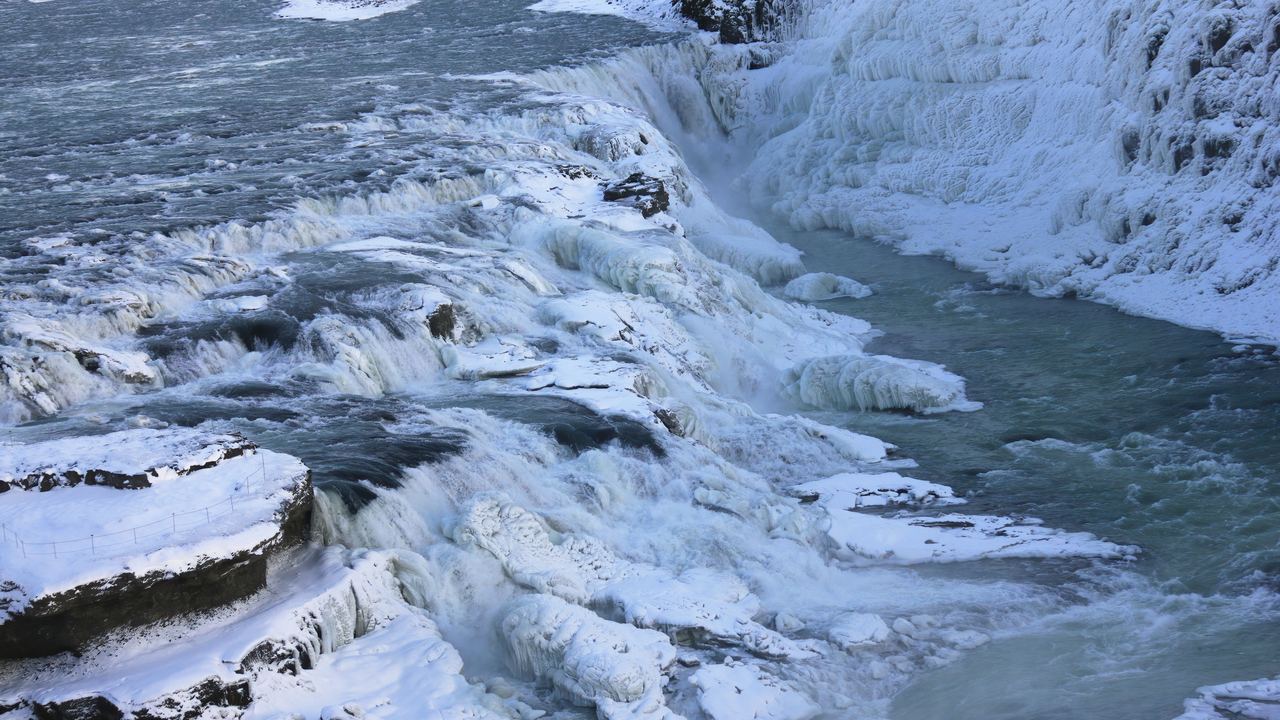
Three different things get called a frozen waterfall, and only one of them is a waterfall that has actually frozen. At Niagara, the spray builds a crust of ice while the water keeps running underneath. In a cold gorge, a smaller fall can freeze into a column that people climb. And on one night in 1848 the river itself stopped, because ice from Lake Erie jammed the channel upstream. This guide separates the three using the operators' own words, then turns to the other end of the year, when snowmelt decides how much water arrives. It does not tell you how to approach ice. Where a source speaks about danger, we report what it says and leave the rest to the people on site.
This page gives general information from the sources named on it, as we read them on the dates shown. It is not medical, legal or safety advice. Rules and conditions at a waterfall can change within hours: follow the signs, the park and your guide, and see a doctor or your public health authority for health questions.
We earn a commission when you book a tour through the links on this site, at no extra cost to you. It does not change what we write. How we are paid is explained in our Editorial Policy. If you are weighing a winter trip, how to read a waterfall tour listing covers what to ask before you book, and when a waterfall has water explains where the water comes from in the first place.
Do the Niagara Falls freeze?
Niagara Parks answers on its frozen falls page, which we read on October 27, 2026: technically no. In particularly cold weather, it says, the mist and spray form a crust of ice over the rushing water, so the Falls look as though they have stopped, while the water continues to flow underneath the ice. It looks stopped. It is not. The same page puts the winter flow over the Falls at approximately 85 million liters a minute, because 75% of the river is diverted before the Falls for hydroelectric power, and the summer flow from April 1 through October 31 at about 170 million. The cold does not take half the water. The power schedule does, and our guide to Niagara, erosion and the 1950 treaty explains the rules behind it.
The page also explains a detail that photographs show and captions skip. The American Falls look more frozen than the Horseshoe Falls because they receive only about 7% of the Niagara River's flow, with the rest going over the Horseshoe. With less water going over, Niagara Parks says, there is more opportunity for ice to build up, which gives the appearance of frozen falls. Same river, same winter, two different looks.

What is the ice bridge?
In winters with a majority of days below zero, Niagara Parks says, an ice bridge usually forms below the Falls. Often in January, during a mild spell followed by a strong southwest wind, ice breaks up on Lake Erie, travels down the Niagara River and goes over the Falls. The wet ice is forced up out of the water below, where it freezes into a mass the page compares to a glacier, with the potential to build up to the height of ten stories.
People walked out onto it for entertainment from the 1880s. Then came 1912. According to the page, an accident during a particularly mild spell ended the era of public access onto the ice bridge.
Has Niagara ever stopped?
Once. For as long as the records show, anyway. Niagara Parks says that for 30 hours in March 1848 the river ceased its flow. High winds set the ice fields of Lake Erie in motion, and millions of tons of ice lodged at the source of the river and blocked the channel completely, so that people who were used to the sound of the river heard silence and those brave enough walked or rode over the exposed riverbed. A shift in the ice eventually let the pent-up water break through, and the flow resumed. Some secondary sources give a longer stoppage. We use the operator's own number, which is 30.
The same page says an ice boom has prevented a repeat. Since 1964 a boom at the source of the river has controlled damage from floating ice that had been impeding power diversions and damaging shoreline installations and bridges. It is 2.7 kilometers long, made of floating steel pontoons, and sits between Fort Erie and Buffalo. The page says its annual installation has prevented a repeat of 1848. The thing that stopped the river in 1848 is now prevented by a piece of equipment that goes into the water every year.
Ask what the waterfall looks like on your date, not in January. A photo of ice is a photo of one week.
Niagara and its ice, as Niagara Parks tells it
Dates and descriptions from the operator's page, read October 27, 2026.
The origins
-
March 1848
The river stops
Ice jammed at the source of the river and blocked the channel for 30 hours.
-
1880s
Visitors on the ice
Gathering on the ice bridge for entertainment became a popular pastime.
The growth
-
1912
Public access ends
An accident during a mild spell ended access to the ice bridge for the public.
-
1964
The ice boom
A boom at the river's source began holding back floating ice from Lake Erie.
Today
-
Read in 2026
Annual installation
Niagara Parks describes the 2.7-kilometer boom as installed every year.
Which waterfalls freeze solid?
Some do, for part of the year. National Geographic Education lists frozen waterfalls as a type of its own, defined simply: for at least part of the year, the waterfall freezes. It adds that mountaineers often climb them, and gives the example of a single pillar of ice in Vail, Colorado, that plunges more than 30 meters. The Plitvice Lakes park says on its facts page that in the cold winter months temperatures sometimes drop so low that its Great Waterfall freezes, and that autumn and spring are when you can fully enjoy it. Yosemite National Park's waterfalls page, last updated May 12, 2026, tells visitors to look for an ice cone at the base of the upper fall during winter. It does not say how the cone forms. Neither do we. None of them gives a month by which it will happen.
When is a fall frozen and when is it only iced over?
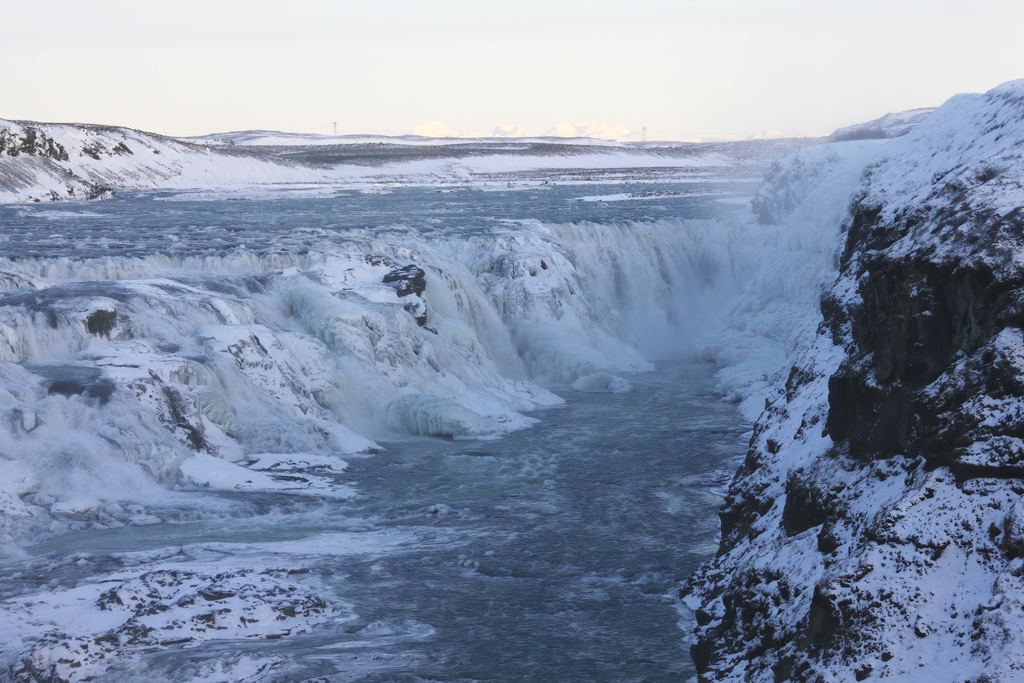
The test is simple: is the water still moving? In the photograph beside this text, Gullfoss in Iceland in winter, the banks are covered in ice and snow, yet there is open water in the channel. Ice proves little. A landscape can look frozen from end to end while the river carries on. Niagara Parks describes exactly that gap in its own words: the Falls look stopped when the spray crust forms, and they are not.
For a trip, the difference matters less for the view than for what you can do. A fall that has frozen into a column is a different object from one running behind ice, and paths and viewpoints can be open or closed depending on which one a site has that day. The Seljalandsfoss notice below is an example. Ask what is open on the date you travel. Last January's photo answers a different question.
What falls when the ice thaws?
The ice itself. South Iceland's regional tourism site, in its entry for Seljalandsfoss, says that in winter the area around the waterfall can be dangerous: paths can be slippery and large pieces of ice fall, which makes it extremely dangerous to go close to the cliffs and particularly dangerous to walk behind the waterfall. The fine mist freezes on the cliffs and on the ceiling of the path behind the waterfall, and when the weather warms and the ice begins to thaw it can fall off in large chunks. The page advises caution and respect for the closure of the paths. The page treats the closures as something to respect, not to work around, and our guides to waterfall safety and closed or dry waterfalls cover how to check them. The Seljalandsfoss and Skógafoss tour pages list the day trips that go there.
Does snowmelt decide the spring?
In cold-country rivers it does, and the Icelandic Met Office has one year written down. Its report on river flow for the 2009/2010 water year, which we read in Icelandic, says the flow of Jökulsá á Fjöllum at Grímsstaðir was very close to average until June, when glacier melt began. Spring melt from the highlands begins in early May, it says, and glacier melt follows in June. The weather was warm and sunny. Timing moves with the year. The water that ran in June, July and August was 1.4 cubic kilometers more than in an average year. The report's opening lines also tie that year's strong glacier melt in Iceland partly to volcanic ash from the Eyjafjallajökull eruption lying on the glaciers. One warm year with an eruption in it is a sequence, not a calendar. We do not turn it into a table. Our North Iceland waterfall tours page covers the day trips to Dettifoss.
The Water Survey of Canada record for the Montmorency River near Quebec City gives the same sequence as a 30-year average: 8.5 m³/s in February and 115.3 m³/s in May, with the gauge placed 0.6 kilometers below a dam and not at the falls. We cover it, with the caveats, in when does a waterfall have water. The Montmorency Falls tour page lists the trips from Quebec City. The wider chart is in the when-to-visit dossier.
What should you ask before a winter trip?
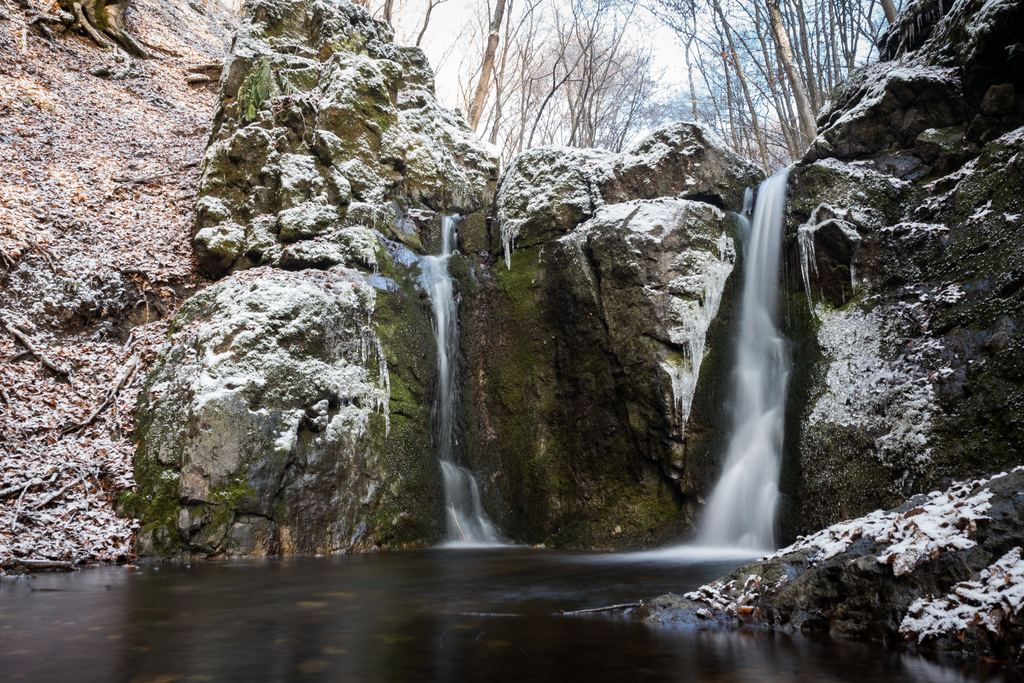
Three questions cover most of it. Ask which viewpoints and paths are open on your date, and which are closed for ice. Ask whether the offer names the waterfall or only the region. Ask what happens to your booking if the operator or the park closes a path. Our guide to reading a tour listing goes through the third. If a listing's photos show a frozen fall, ask when they were taken.
Quick answers
Does Niagara Falls freeze over?
Niagara Parks says technically no. In very cold weather spray and mist form a crust of ice over the water, which keeps flowing underneath. The page was read on October 27, 2026.
Can a waterfall stop flowing in winter?
The river feeding Niagara stopped for 30 hours in March 1848, according to Niagara Parks, when ice from Lake Erie blocked the channel at its source. The operator says an ice boom, installed each year since 1964, has prevented a repeat.
Why do the American Falls look more frozen than the Horseshoe Falls?
According to Niagara Parks, the American Falls receive only about 7% of the river's flow, so there is more opportunity for ice to build up on them.
Data verified on . Niagara Parks, NP Plitvice, NPS Yosemite, South Iceland site and Icelandic Met Office pages read 2026-10-27. Check the official site before you go. Editorial Policy
Niagara Falls, in any season
We earn a commission if you book through this link. Ask the operator which viewpoints are open on your date.